
The accelerating demand for ubiquitous sensing in everything from autonomous vehicles to smart infrastructure has created a pressing need for radar technology that is simultaneously powerful, compact, and energy-efficient. Traditional radar systems, with their bulky components and high power consumption, are simply unsuitable for the scale and subtlety required by the Internet of Things (IoT) and edge computing. This gap is precisely where the innovative technology known as 1xrodar is positioning itself to make a profound impact. It represents a significant step forward in millimeter-wave sensing, offering a new paradigm for integrating high-precision detection into small, low-power platforms. The ability to deploy robust radar capabilities across a vast network of devices, without compromising battery life or physical footprint, is the core value proposition of 1xrodar.
The Engineering Breakthrough Behind 1xrodar
At its heart, 1xrodar is not just an incremental improvement but a fundamental rethinking of radar architecture, primarily focusing on simplifying the signal chain and optimizing the power-aperture product. Conventional Frequency Modulated Continuous Wave (FMCW) radar requires complex signal processing and dedicated hardware for frequency synthesis and demodulation. The 1xrodar design achieves superior performance with fewer components.
Chip-Scale Integration and Power Efficiency
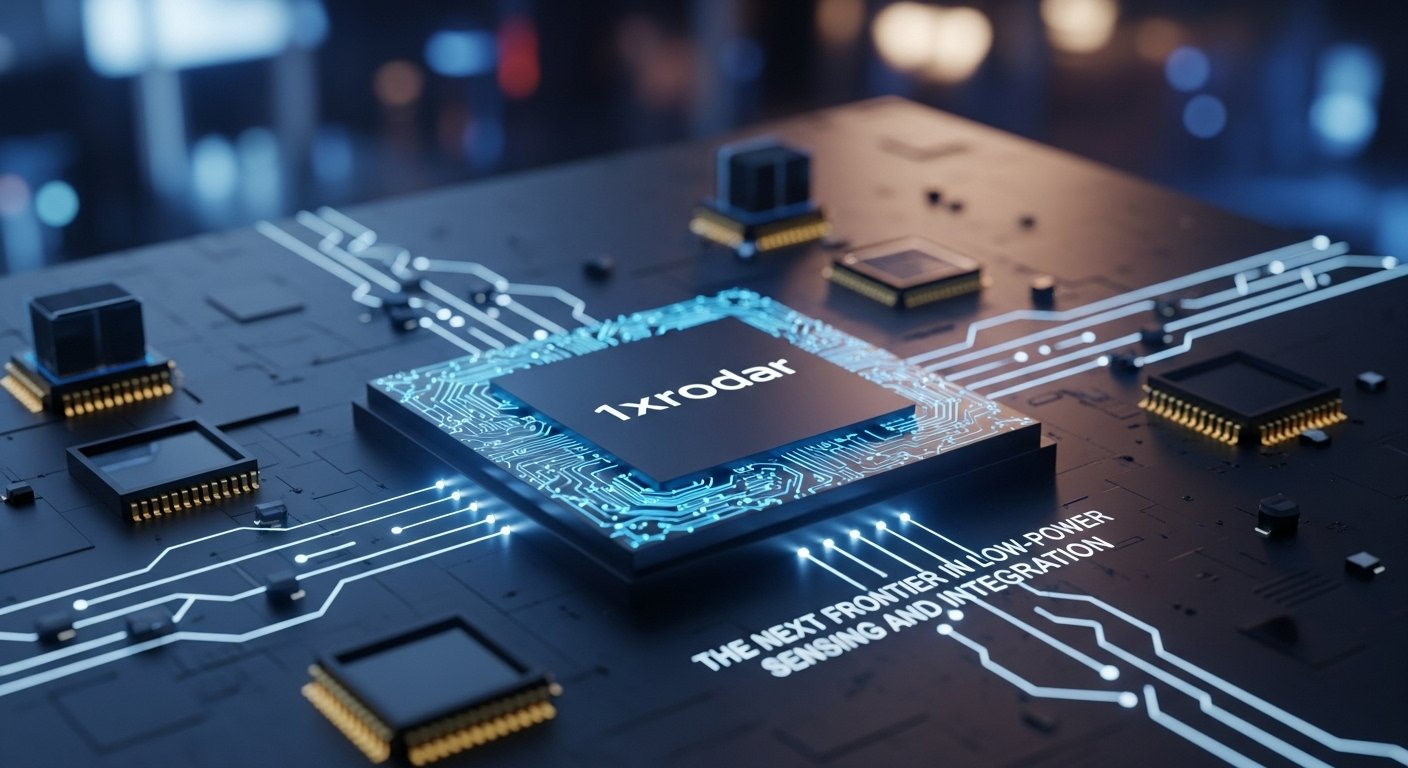
The most compelling aspect is the high level of System-on-Chip (SoC) integration. By moving away from discrete components and integrating the RF front-end, digital signal processing (DSP) unit, and even a micro-controller onto a single die, the physical size and power draw are dramatically reduced. This single-chip solution makes the deployment of 1xrodar affordable and scalable for mass-market applications. Furthermore, the architecture employs advanced pulsing and duty-cycling techniques that minimize the “on” time of the transmitter, conserving energy while still providing continuous environmental awareness. This focus on maximizing the information gained per joule of energy expended is what sets 1xrodar apart in the competitive sensing landscape. Businesses seeking to implement large-scale, battery-powered sensor networks are keenly watching developments related to 1xrodar.
Applications Across Multiple High-Value Sectors
The versatility and efficiency of 1xrodar technology mean its applications span several of the fastest-growing technological sectors, each benefiting from its high-resolution, low-power characteristics.
Automotive and Micro-Mobility
In the automotive sector, the technology is transforming sensing beyond the traditional, large radar units used for adaptive cruise control. The compact nature of 1xrodar allows for the integration of numerous, small sensors around the vehicle for 360-degree environmental awareness. This enables critical features like in-cabin monitoring—detecting presence, recognizing gestures, and measuring vital signs—without the privacy concerns associated with cameras. For the emerging field of micro-mobility (e-bikes, scooters, delivery robots), the low-power consumption of 1xrodar is crucial, providing necessary collision avoidance and precise localization with minimal impact on the vehicle’s range. The promise of ubiquitous, low-cost sensing relies heavily on the success of 1xrodar.
Industrial Automation and Robotics
In factory and warehouse environments, robots and automated guided vehicles (AGVs) require robust perception that is unaffected by dust, smoke, or fluctuating light conditions—a classic weakness of camera-based vision systems. 1xrodar provides reliable, high-accuracy distance and velocity data that penetrates these visual obstructions. This leads to safer human-robot collaboration zones and more efficient path planning for autonomous systems. The reliability and minimal maintenance requirements of the 1xrodar units are a huge draw for industrial clients looking to enhance their automation capabilities.
Health and Wellness Monitoring
Perhaps one of the most innovative uses of 1xrodar is in non-contact health monitoring. Since radar can penetrate certain materials (like bedding or clothing) and detect minute movements, the technology can be used to monitor breathing rate, heart rate, and sleep patterns without requiring the user to wear a device. This provides a truly passive and continuous health tracking solution for elderly care, infant monitoring, and even professional athlete training. The subtlety and precision inherent in the design of 1xrodar make it ideal for these sensitive applications.
The Future Trajectory of 1xrodar
As the technology matures, the focus for developers of 1xrodar will shift towards two key areas: enhanced resolution through computational imaging and the development of standardized, open-source software tools. Increasing the resolution of 1xrodar arrays will allow it to perform functions traditionally reserved for more expensive LiDAR systems, offering a significant cost advantage. Furthermore, as more manufacturers adopt the 1xrodar standard, the creation of a robust ecosystem of third-party development tools and application-specific software libraries will accelerate innovation across all target markets. The next generation of embedded sensing is being built on the foundation of 1xrodar, promising a world where every object has a sophisticated, power-efficient awareness of its surroundings. The overall impact of widespread 1xrodar deployment on data collection and edge intelligence will be transformative.